An upper-lower body training split offers numerous advantages. By focusing on different muscle groups in separate workouts, both beginners and advanced trainees can target specific muscles and increase intensity. This leads to more effective muscle growth and allows for training with heavier weights, more sets, and more repetitions. Such a split is ideal for 3 to 4 workouts per week, ensuring sufficient recovery time for each muscle group. Beginners benefit from this structure because it facilitates learning the exercises, while advanced trainees can specifically address weaknesses and strengthen their shoulders, back, chest, arms, legs, and core.
The crucial foundations for sustainable progress
To achieve sustainable progress in upper and lower body training, load intensity, progression and recovery are crucial foundations.
Load intensity Weight plays a central role in how effectively muscles are trained. To build muscle, the weight should be chosen so that it is challenging in the last repetitions of an exercise.
progression This is key to continuously building muscle strength. This can be achieved by increasing the weight, adjusting the number of repetitions, or varying the exercises. Advanced athletes, for example, can specify their training by using exercises for specific muscle groups, while beginners should focus on the basic exercises. Read on here.
recreation Recovery is often the underestimated factor. At least 24 hours should pass between training sessions to give muscles the necessary time to regenerate. A balanced ratio of training and recovery promotes muscle growth and prevents overtraining, leading to more effective results in the long run. By optimally integrating all three components into the training plan, both beginners and advanced athletes can achieve their goals.
Frequency and volume: How often and how much should you train?
The frequency and volume of your upper/lower body training plan should be individually tailored, as they depend heavily on your personal recovery capacity. This can be influenced by factors such as work demands or general stress levels. Generally, it's advisable to differentiate between... 3 and 6 times per week to train, whereby beginners as well as advanced amateur athletes and ambitious fitness athletes should flexibly adjust their training intensity and frequency.
To account for fluctuations in daily stress, you can adjust your training plan. Shorter sessions might be beneficial on stressful days, while longer sessions are more suitable on more relaxed days. z.BYou can plan for a higher volume. This way you remain flexible and can pursue your goals sustainably.
Which muscle groups should you train together in a 2-day split routine?
There are several variations of the 2-day split to choose from. The most common types are the upper/lower body split, where all upper body muscles are trained on the first day and all lower body muscles on the second day, and the push/pull split, where all pushing muscles, such as chest, quadriceps, and triceps, are trained on one day and all pulling muscles, such as the entire back and hamstrings, on the other.
For whom is a 2-day split training program beneficial?
The 2-day split is suitable for both beginners and advanced athletes, as it offers a clear structure that facilitates learning fundamental exercises while ensuring sufficient recovery time. Beginners benefit from the focused division, which allows them to systematically develop technique and muscle groups. Advanced athletes can optimize their performance progress through increased intensity, targeted exercises for weak areas, and flexible adjustments to training volume. Furthermore, the split allows for individual customization of training frequency and intensity to meet different needs and goals.
Exercise selection: How to get the most out of every session
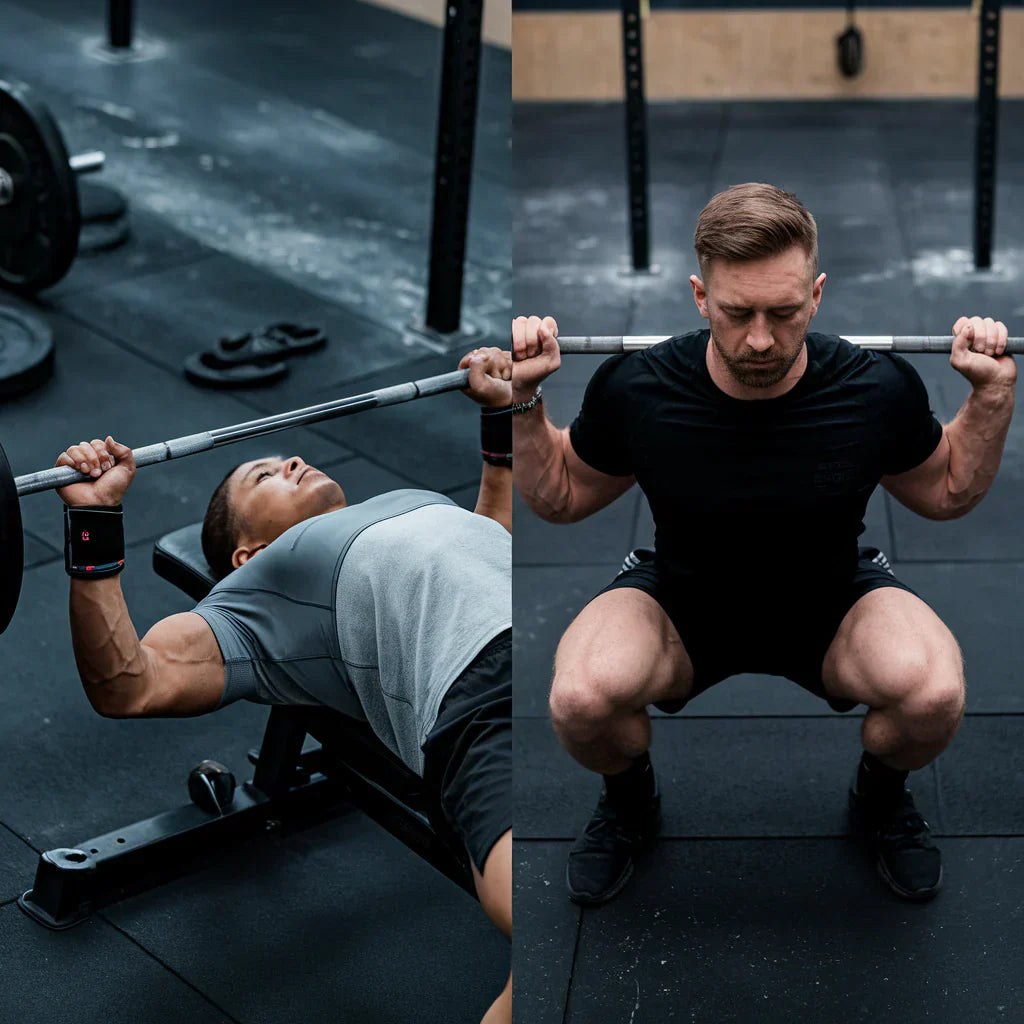
To get the most out of your upper/lower body training plan, the choice of exercises is crucial. Complex multi-joint exercises Exercises like squats, deadlifts, and bench presses can form a solid foundation. These exercises train multiple muscle groups simultaneously and promote not only muscle mass but also strength and stability. For example, squats activate not only the thigh muscles but also the core and glutes, while bench presses work the chest, shoulders, and triceps.
To achieve comprehensive muscle growth, however, it is important to supplement these compound exercises with isolation exercises. Isolation exercises, such as bicep curls for the arms or tricep extensions for the triceps, help to target specific muscle groups and improve their definition. In a 2-way splitWith training that treats the upper and lower body in separate sessions, you can focus on these isolated exercises to optimally stimulate the muscles. This way, you get the most out of every session and ensure that you make progress in both strength and aesthetics.
Focus on key areas: Targeted strengthening of weak muscle groups
To specifically strengthen weak muscle groups like the rear deltoids or upper chest in an upper-lower body split workout, it's important to train these areas first and adjust the volume accordingly. A two-day split, where the upper body is trained one day and the lower body the next, offers the flexibility to emphasize specific muscle groups in both body parts.
Overall, these exercises should be integrated into the regular training plan to ensure balanced development of the upper body and to specifically build up weak muscle groups.
Flexibility in everyday training: Alternatives and adjustments
An effective upper/lower body workout plan can easily be adapted to different equipment and personal preferences. For example, if you don't have access to a fully equipped gym, you can use bodyweight exercises.
Time factors They also play an important role. If you have limited time, you can z.B. reduce the number of sets and increase the intensity to improve efficiency.
Summary
An effective upper-lower body split is an excellent method to specifically train different muscle groups while optimizing recovery.First, it is important to create a balanced ratio between upper and lower body exercises.
Furthermore, incorporating different training methods, such as cluster sets or other intensity techniques, can help increase the effectiveness of your workout. Be sure to document your progress and make regular adjustments to avoid plateaus. These strategies will keep your training engaging and effective, helping you achieve your goals sustainably.