Introduction
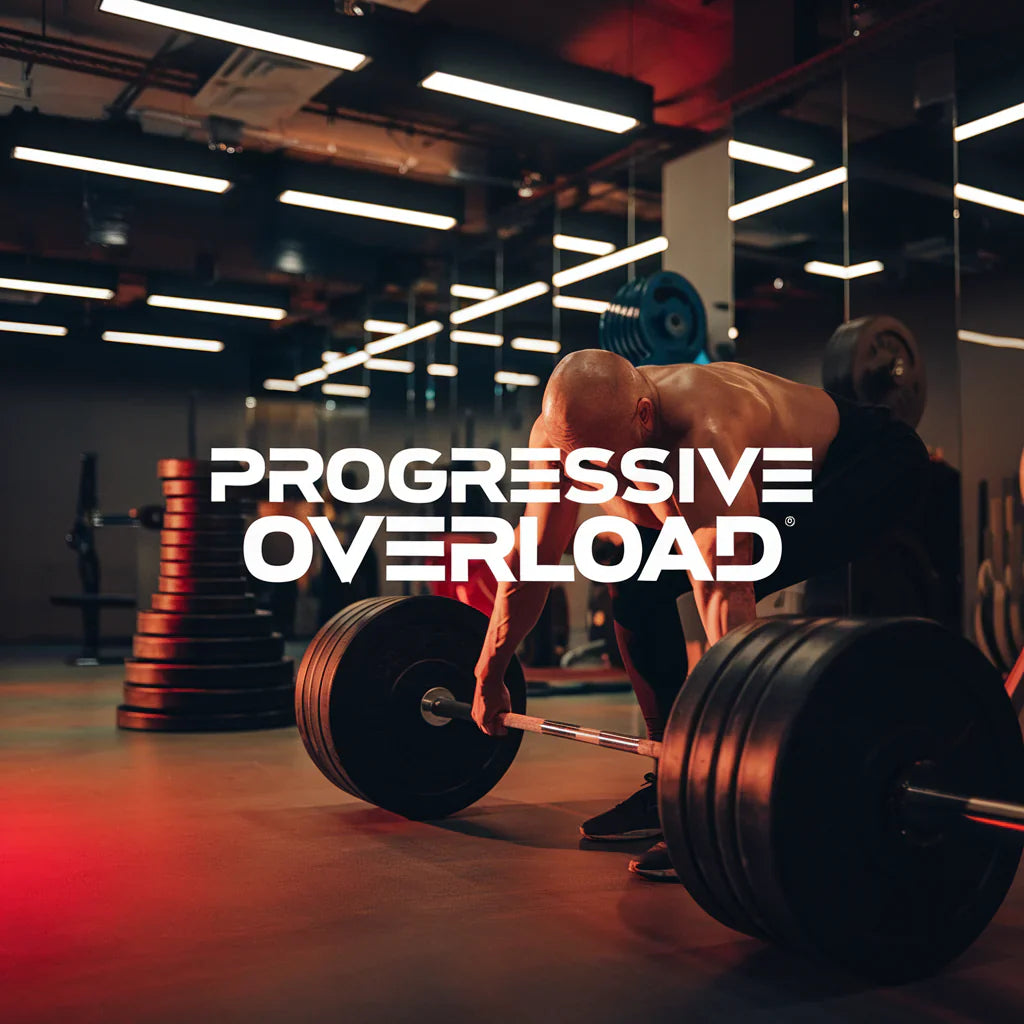
Progressive overload is a central principle in strength training and plays a crucial role in muscle growth. It describes the targeted increase of training load over time to continuously expose the body to new stimuli. This approach is essential for effectively challenging the muscles and promoting muscle growth. When we train, whether by increasing the weight, repetitions, or sets, the muscle fibers are stressed, leading to hypertrophy and thus an increase in muscle mass.
Basic idea of Progressive Overload
The basic idea of Progressive Overload The goal is to continuously increase the training load in order to make progress in Muscle building and in the Power to achieve. If you regularly with Exercises How you train, like weightlifting, your Body to the existing stimuli. This means that the muscles They will no longer grow effectively or become stronger if the intensity remains constant. hypertrophy and thus a significant Muscle growth To achieve this, it is crucial to... intensity the Repetitions and Sentences to increase gradually.
Without a continuous Stimulus It will be difficult in the long term progress to do it. Beginners can often start with a lighter weight, but to make the Muscles and the muscle mass To optimize, they must in their Training plans increasingly heavier weights or more Repetitions integrate. Methods the Strength training ensure that the muscle fibers are constantly challenged anew. Only through a high level of... Burden and a targeted volume This way you can ensure that you don't stagnate, but steadily become stronger and more muscular.
Why is this principle indispensable in the long term?
Progressive overload is a fundamental principle that should underlie every training routine, as it is crucial for long-term progress. By gradually increasing the load, whether through heavier weights, higher repetitions, or more intense exercises, we constantly challenge our muscles. This is essential for... Muscle building and the hypertrophy.
Without appropriate training adjustments, many athletes reach a point of stagnation. These plateaus can be frustrating and lead to demotivation when no progress in strength or endurance is seen. If the training remains unchanged, the body adapts to the movements and the load, ultimately hindering workout success. To counteract this, it is crucial to make regular adjustments to continue challenging the muscles.
Targeted training using the progressive overload principle ensures that muscles grow and adapt continuously. By increasing weight or intensity, the body is stimulated to develop more. Protein/Muscle to build strength and improve overall fitness. This keeps training not only effective, but also exciting and motivating.
Positive effects of continuous load increase
The continuous increase in training load, also known as progressive overload, offers a variety of positive effects that benefit both strength and endurance athletes.One of the main advantages is breaking out of training plateaus. When the body has adapted to a certain workload, progress stagnates. Targeted increases in intensity, volume, or frequency can overcome this plateau, allowing for continued muscle growth and performance improvements.
Furthermore, progressive overload specifically improves strength and endurance performance. In strength athletes, a gradual increase in weights leads to stronger muscles and a greater need for protein for muscle repair and growth. This results in larger and more powerful muscles.
One effect that should not be overlooked is that the athlete permanently motivated Through continuous improvement, the athlete receives ongoing positive feedback.
Potential problems
Progressive overload is a proven concept in strength training that aims to promote muscle growth and performance through continuous increases in training intensity. However, incorrect or excessive application of this principle also carries risks that should not be underestimated.
One of the greatest dangers is the "Overtraining Overtraining occurs when the training load is increased faster than the body can adapt/recover. Too rapid increases in weight or repetitions can lead to chronic fatigue, which negatively impacts performance. The body needs time to recover and build muscle. Ignoring these recovery phases can lead to decreased strength and even injuries.
Furthermore, there is the risk of Joint overload This should not be overlooked. Incorrect technique or lifting excessively heavy weights can lead to unnatural stress on the joints. Correct exercise execution is crucial, especially with complex movements like deadlifts or squats. Incorrect movement patterns can cause significant damage not only to the muscles but also to the joints.
To avoid these problems, athletes should always make sure to increase their progress gradually and listen to their body's signals. recreation This must always be the top priority, so that the body has time to adapt and regenerate. Only in this way can significant long-term progress be achieved without endangering health.
Fundamental prerequisites for secure progress
To effectively benefit from the principle of progressive overload, it is important to observe some fundamental prerequisites that support both safety and long-term progress.
1. Clean technology:
Proper exercise execution is crucial for muscle building. Clean technique reduces the risk of injury and ensures that the target muscles are effectively engaged. Make sure you perform the movements in a controlled manner and without momentum.
2. Systematic documentation of progress:
To measure progress and make targeted adjustments, it's essential to keep a training log. Record repetitions, weights, and exercises to visualize your progress over time. This will help you work effectively towards your goals.
3. Regular rest days:
Rest is an often underestimated aspect of muscle building. Without adequate recovery periods, overtraining can occur, which hinders progress.Schedule regular rest days to give your body the necessary time to recover and prevent injuries.
By following these basic rules, you create the best conditions for safe and effective progress in your training.
Different approaches to implementation in training
To progressively challenge the body, there are various approaches that focus on both increasing weight and providing alternative stimuli. One of the simplest methods is to gradually increase the weight used in exercises. This can be done through small adjustments of 1-2 kg to ensure that the muscles are continuously challenged.
Another possibility is to increase the Repetition numbersInstead of increasing the weight, you can increase the number of repetitions per set to work the muscles more intensely. Also shorter breaks Breaks between sets can help increase training volume and intensity.
Additionally, you can Training frequency Increase or decrease by adjusting the number of training sessions per week. A variation of the range of movement as well as the Execution speed The exercises can also provide new stimuli. Alternative exercises with different resistance profiles can also be helpful.
Intensity techniques such as Drop sets or Supersets These are effective methods to further challenge the muscles. However, these techniques should be used in moderation to avoid excessive intensity/volume. By combining these approaches, you can effectively build muscle while simultaneously preventing injuries.
Weight adjustment
To effectively promote muscle growth, it's important to adjust your training weight regularly. It's helpful to set a personal target number of repetitions that you must achieve before increasing the weight. If you can't regularly increase the weight, it means you're not reaching your limits with your current weight or your recovery isn't keeping up.
Increasing the weight should always be done with caution. Proper technique is crucial to avoid injury and effectively target the muscle. When increasing the weight, ensure you maintain a controlled and precise movement. A sudden increase in weight can compromise technique, reducing training effectiveness and increasing the risk of injury. This is especially important to remember after a strict diet.
A good approach is to increase the weight by about 2.5 to 10% once you've reached your repetition goal. This ensures you continue to challenge your body while maintaining proper form. This strategic adjustment allows you to build muscle sustainably and effectively pursue your training goals.
Integrate more repetitions
An effective method to apply the principle of Progressive Overload The key is to increase the number of repetitions in your training, rather than just increasing the weight. Increasing the repetitions allows you to work your muscles more intensely, leading to better muscle growth and improved strength development.
One way to achieve this is by using Partner supportA training partner can help you complete additional repetitions when you reach your muscular limits. This allows you to maintain proper form while pushing yourself to muscle failure. However, the risk of injury should be considered.
Additionally, Rest-pause sentences An excellent strategy for maximizing repetitions. With this method, you perform an exercise to muscle failure, then rest for a short time (e.g., 10-15 seconds), and then attempt additional repetitions. This technique not only promotes muscular endurance but also ensures you don't sacrifice your form while pushing your limits. Combining these strategies ensures your muscles are continuously challenged, ultimately leading to better training results.
Shorter breaks for more intense sessions
Shorter rest periods between sets and exercises are an effective way to make training more intense and promote both muscle and endurance growth. When rest times are reduced, the body remains in a constant state of tension, leading to increased metabolic stress.
Reducing rest periods increases training intensity, meaning the body has to work harder to deliver the required performance. This can be particularly beneficial when the goal is to improve endurance. Studies show that shorter rest periods also increase heart rate and place greater demands on the cardiovascular system, leading to improved aerobic capacity.
Scope and frequency vary
To increase training volume through progressive overload, it's a good idea to incorporate additional sets or exercises into your program. Simply increasing or decreasing the number of sets for a particular exercise can significantly impact your overall progress. Furthermore, by modifying exercises that target the same muscle group, you can vary the training stimuli and thus target specific muscles.
The benefits of training individual muscle groups more frequently are numerous. More frequent training promotes muscle adaptation and can lead to faster progress in strength and hypertrophy. Furthermore, it allows for better utilization of muscle glycogen and can increase muscular endurance.
However, careful planning is essential to avoid overtraining and injuries. It's important to consider recovery times between training sessions and listen to your body's signals. A well-structured program should keep both intensity and frequency in mind to ensure you reach your goals without overstressing your muscles.
Typical mistakes that slow down your progress
Progressive overload is a proven training principle that aims to improve physical performance through a steady increase in training load. However, despite its effectiveness, there are common mistakes that can significantly hinder athletes' progress.
A very common mistake is this excessive optimization the technique or the duration of the exercise.Focusing too heavily on the aforementioned points causes the actual goal of training to be lost. Muscular adaptation only occurs when the underlying stimulus exceeds a certain threshold. This threshold can be exceeded through a balanced combination of rest periods, frequency, volume, weight, nervous system load, stress, execution, execution time, and other factors. Optimizing only one factor is less efficient than improving a balanced mix of all. For example, if an exercise technique is already very good, the focus should perhaps shift to the weight.
A typical mistake is that excessive increase in training weightMany athletes are motivated and believe they can maximize their progress by drastically increasing the weight in each workout. However, this can lead to injuries and compromise proper exercise form. It's important to increase the weight gradually and give the body time to adapt.
Another common mistake is the Neglect of technologyWhen athletes try to increase the weight quickly, their form often suffers. Poor technique can not only cause injuries but also prevent the desired muscle groups from being optimally activated. Therefore, proper technique should always be the priority before increasing the weight.
Additionally, the Lack of breaks Overtraining can significantly impact progress. Many athletes tend to train continuously, assuming that more training leads to more progress. In reality, however, the body needs time to recover. Overtraining can not only reduce performance but also increase the risk of injury.
Finally, the Using too many methods in parallel A common mistake. Some athletes try to try several training methods at the same time, such as... z.BStrength training, endurance training, and HIIT. This can lead to confusion in training and overload the body, thus hindering progress.
Finding a healthy balance is crucial to maximizing the benefits of progressive overload. It's important to increase the workload gradually, prioritize technique, schedule regular rest periods, and maintain a clear focus on the chosen training method. Only then can sustainable progress be achieved.
Final thoughts on the principle of progressive overload
Progressive overload is an essential tool for overcoming training plateaus and achieving long-term success. By systematically increasing the intensity, volume, or complexity of the training, we challenge our bodies to adapt and grow. Without this continuous stimulus, progress stagnates, which can be frustrating and reduces motivation.
However, it is crucial that this approach is controlled. Too rapid or extreme increases can raise the risk of injury and diminish the enjoyment of the sport. Therefore, recovery, technique, and progression should be in harmonious balance.
A structured training plan that includes recovery phases is essential to avoid overtraining. Make sure to optimize your technique for each exercise, as proper execution not only contributes to training efficiency but also protects against injuries.
In summary, progressive overload is not just a means to an end, but also a philosophy that forms the foundation for sustainable athletic success. By proceeding intelligently and thoughtfully, we create the conditions for long-term, motivating, and healthy training.